

Thank you!
The form has been successfully submitted
The form has been successfully submitted
Oops! Something went wrong, please try again

A company may invest in marketing in a new country, launch ads, localize its website and still lose part of its leads at the call stage. The reason is simple: the customer has no local contact. An international prefix looks like a “foreign” business. Some inquiries simply never happen.
Virtual numbers solve exactly this issue. A virtual (DID) number for business allows you to create a полноценный market entry point without opening a physical office. An international company number appears local, but operates through international VoIP. The business receives inbound traffic from a new country and manages it centrally.
This is a tool for controlled entry into new markets and business scaling without capital infrastructure expenses.
Entering new markets always begins with a trust test. A company may adapt its product, pricing, and marketing, but if the communication channel looks “external,” some customers will not proceed to contact. A local telephony presence removes this barrier before the first conversation even starts.
For international businesses, a phone number signals scale, stability, and readiness to operate in a specific country. That is why a local number for international business often becomes the first step in building a long-term position in a new market.

Customers do not analyze your infrastructure architecture. They evaluate simple signals: the website is localized, the currency is familiar, and the phone number is from their country.
A local number for international business creates a sense of accessibility. For B2B, this means a higher willingness to schedule a call. For B2C, it means more attempts to reach out.
If a company uses a business number without a physical office, but the number appears local, customers perceive the brand as present in the market. This is how customer trust is formed at the early stage of expansion.
A local country code affects not only perception but also behavior. Some users simply avoid calling international numbers due to concerns about call costs or doubts about the company’s actual availability.
A European business number or a local city code reduces this barrier. For SaaS or eCommerce, this means more inbound consultations and fewer lost leads due to distrust of an international format. A virtual number abroad becomes a tool that converts marketing traffic into real inquiries and supports call conversion growth.

Virtual (DID) numbers are part of a company’s VoIP infrastructure. A DID number for business is not connected to a physical line in a specific office. It operates through a cloud system and integrates with a PBX.
International VoIP transmits voice traffic through internet networks. When a customer calls an international company number, the call enters a routing system.
Call routing is configured according to business logic:
This allows businesses to manage inbound traffic as a structured process rather than as isolated calls.
A virtual number for a startup or a number for a SaaS company is connected remotely. The company obtains a European business number or a number in another region, configures routing, and begins receiving calls.
No physical office is required. Global telephony provides local presence without legal or operational infrastructure in the country. For market testing, this reduces the risk of incorrect investments.
International expansion is often slowed not by strategy but by infrastructure. While a company opens accounts, negotiates local contracts, and sets up communication channels, competitors are already testing the market. Virtual numbers move telephony from a “capital expense” model to a rapid-launch model.
Entering a new country no longer becomes a separate project with a long preparation cycle. It becomes a technical connection with clear control parameters: number, routing, integration, and analytics. In this way, a virtual number abroad becomes a market validation tool.
A virtual number abroad allows a company to start operating in a new market within one business day.
The company connects an international number, integrates it into the PBX, launches advertising campaigns, and begins tracking performance indicators: call volume, conversion rate, and average response time.
Initial data appears immediately. If inbound traffic meets expectations, business scaling accelerates. If not, costs remain limited to the test period. Decisions are made based on actual demand rather than assumptions.
A call center number in different countries can be connected to a single system. The team sees statistics for each market in one dashboard: call volume, missed inquiries, and operator workload.
Call routing is adjusted based on load, time zones, and language groups. If one team is overloaded, traffic is redirected to another without loss of service quality.
In this model, global coverage becomes a managed inbound traffic system with predictable performance metrics.
SaaS companies use a virtual number for startups to localize support across multiple countries simultaneously. This increases customer trust and accelerates deal closures.
eCommerce projects connect an international company number to handle returns and complex orders. A local number for international business reduces abandoned inquiries.
A call center number allows operators from different locations to be unified in one system and enables call redistribution without compromising handling quality.
Scaling a business through global telephony requires measurable results.
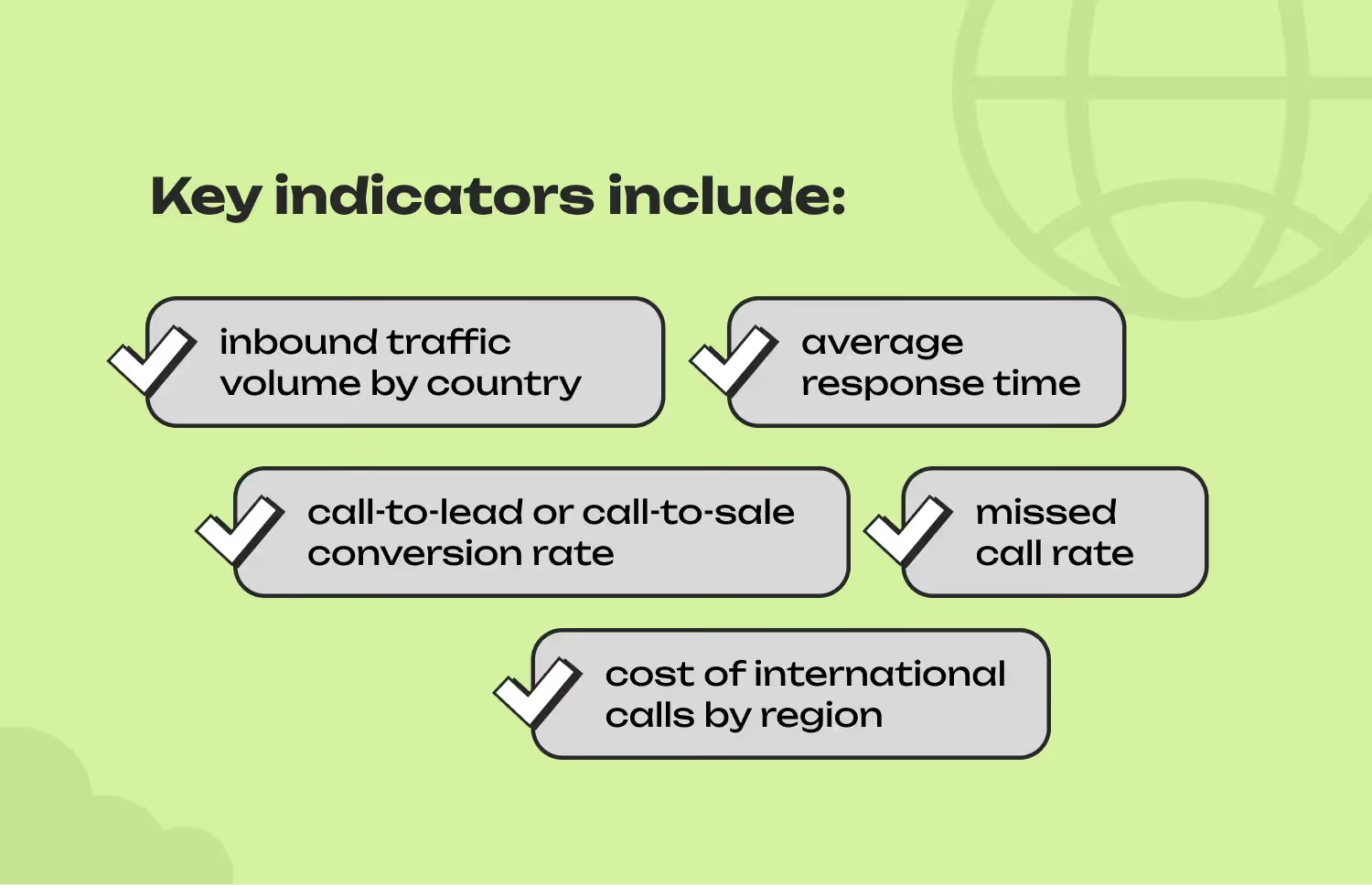
These metrics show whether local presence functions as a growth tool.
Virtual (DID) numbers form the infrastructure foundation for entering new markets. A DID number for business allows a company to scale gradually, test demand, and control costs while maintaining full control over call routing and customer handling quality.