
Thank you!
The form has been successfully submitted
The form has been successfully submitted
Oops! Something went wrong, please try again
When a number receives a spam label, a business does not lose “reputation” – it loses revenue.
In call center operations, blocking or spam labeling can reduce answer rates by 20–45%. In SMS campaigns, a 10–15% drop in delivery rates automatically decreases CTR and conversion.
If an outbound campaign budget is $5,000 per month, even a 25% loss in efficiency means thousands of dollars in unrealized results.
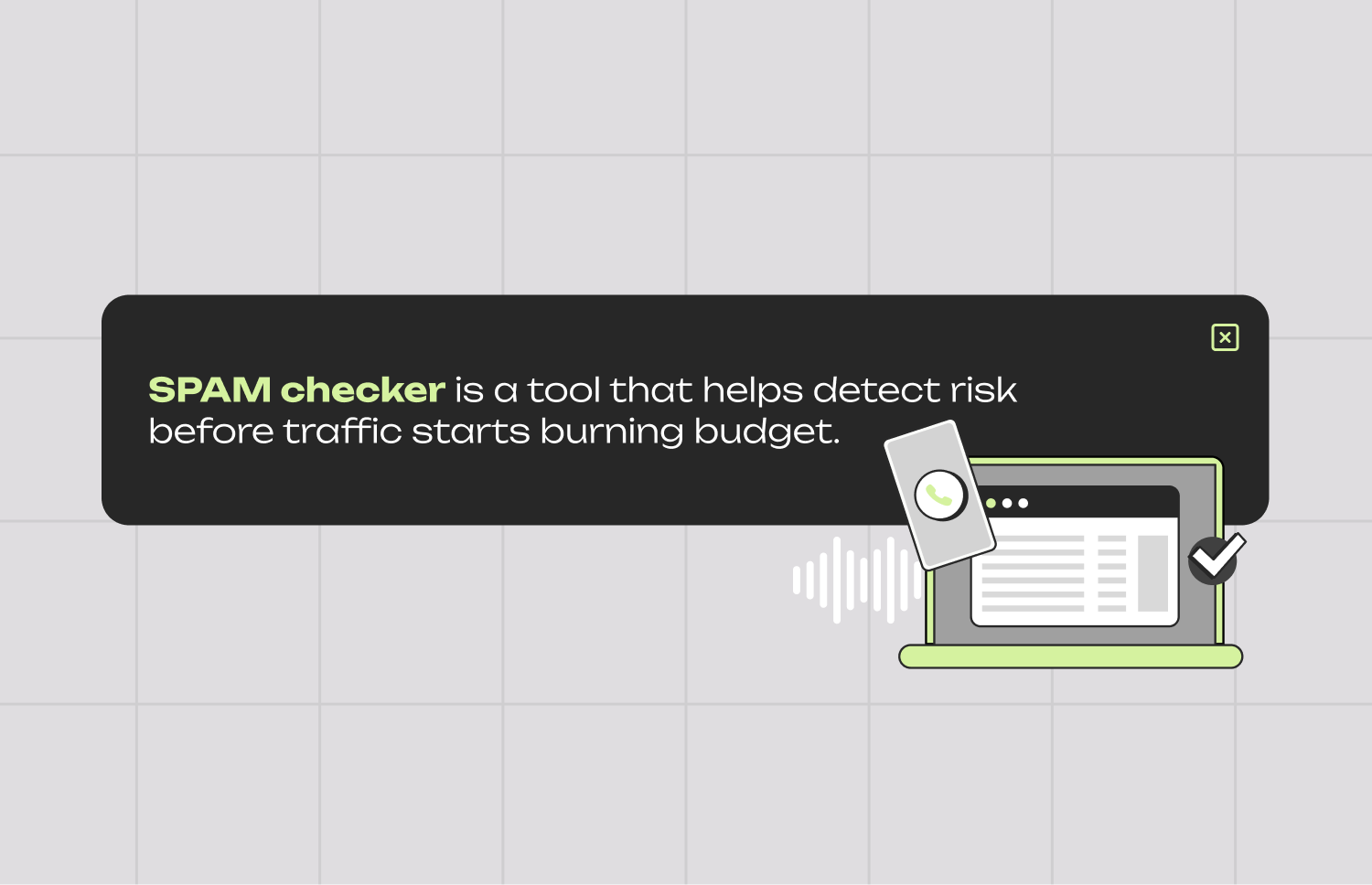
A SPAM checker is a system that evaluates number reputation and determines whether carriers classify it as suspicious.
This applies both to SMS SPAM checkers and Call SPAM checkers. For companies with high outbound volume, call spam detection is critical: if a number is flagged as spam, customers either ignore the call or see a warning.
The result is reduced conversion even with a high-quality database.
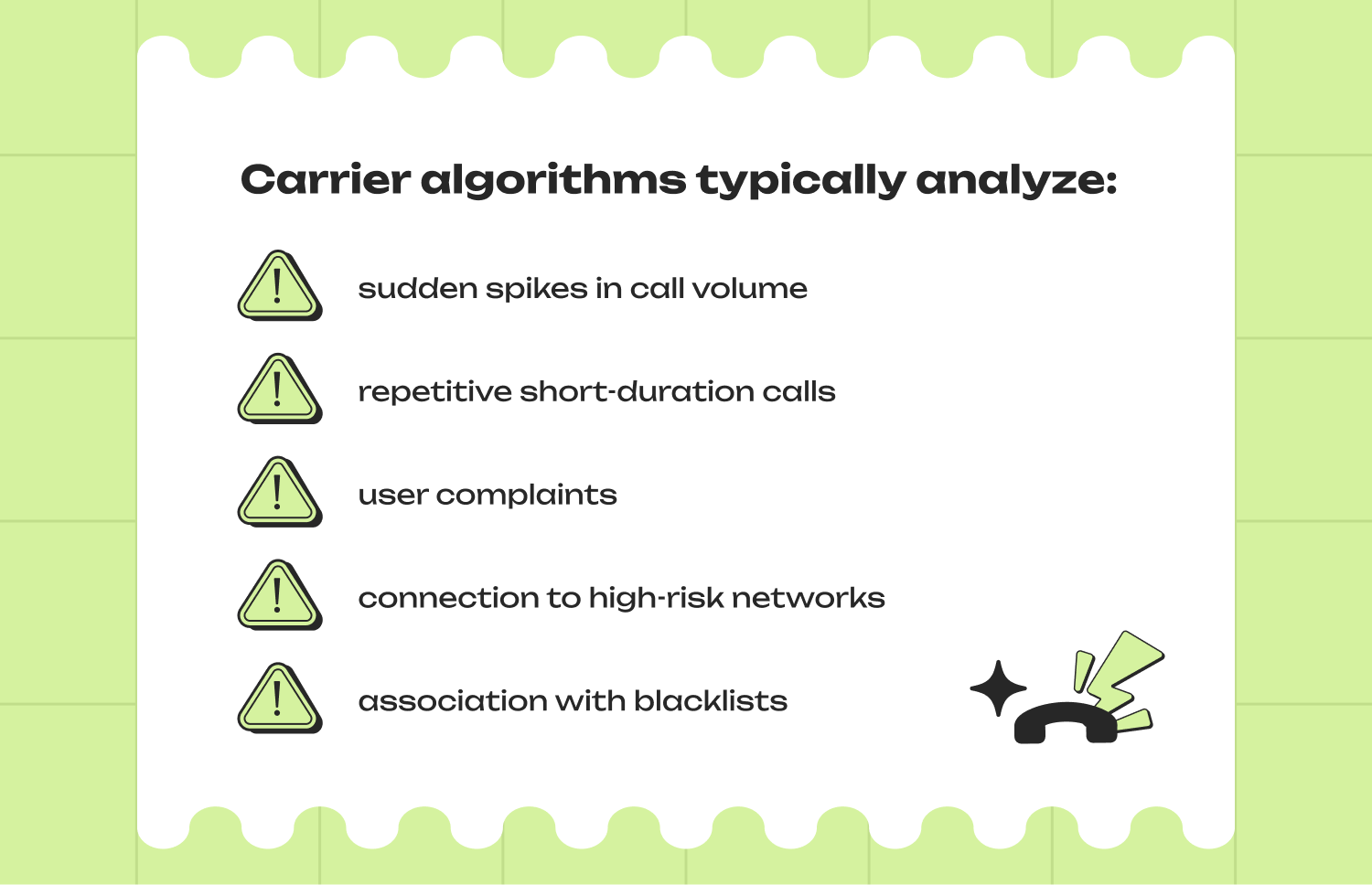
For example, if a new number makes 5,000 outbound calls in one day without prior activity history, the system automatically lowers its trust score.
For SMS, sudden volume spikes also impact delivery rates. Messages may be filtered before reaching the recipient.
Caller ID reputation reflects the level of trust associated with your number.
A low trust score can result in:
For a call center with 30 agents, even a 15% drop in answer rate means thousands of unprocessed contacts per month.
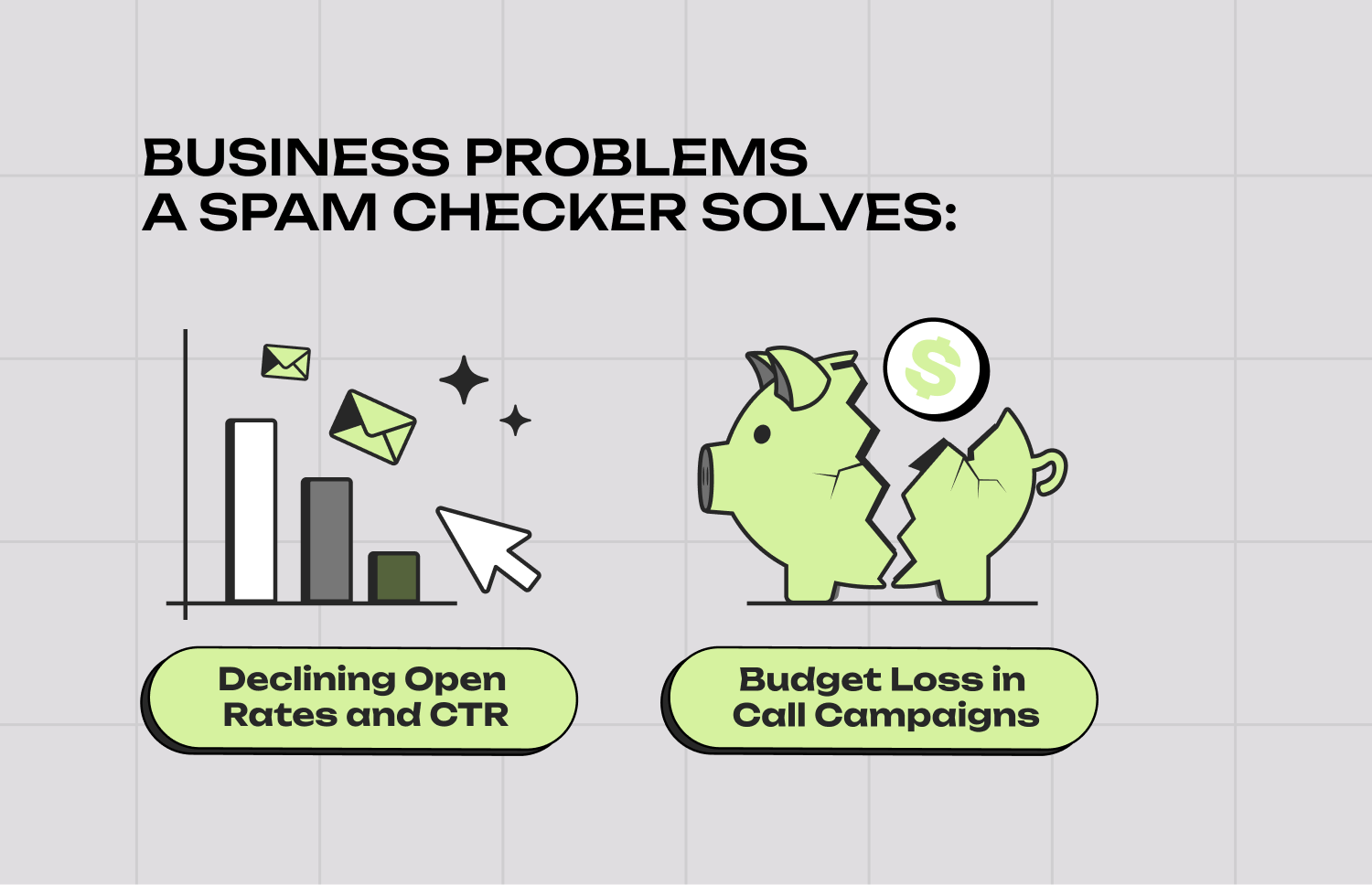
Without monitoring number reputation, identifying the root cause becomes difficult. Marketing adjusts messaging, sales changes scripts, but the issue remains.
When campaign metrics drop without changes in segmentation or offer, the technical status of the number should be checked. Even partial filtering can reduce reach by 10–15%.
For a database of 80,000 contacts, this means 8,000–12,000 recipients may not receive the message. With an average conversion rate of 4–6%, the business loses hundreds of potential actions purely due to reputation issues.
A SPAM checker helps determine whether the problem lies in the message, the database, or the sender status.
In voice campaigns, the impact is even more significant. If calls are marked as suspicious, customers ignore them before connection.
With 10,000 calls per day, even a 20% drop in effectiveness means thousands of missed contacts. At an average cost of $0.10–$0.12 per minute, this translates into thousands of dollars in monthly losses that may not be immediately visible in sales analytics.
A SPAM checker helps maintain traffic stability, monitor trust scores, and avoid situations where a campaign is technically active but practically ineffective.
A SPAM checker analyzes number status across multiple data sources and evaluates risk before and during campaigns.
The system checks:
Based on this data, a risk level is calculated.
Before launching a large SMS campaign or increasing outbound traffic, it is recommended to:
This approach helps maintain SMS delivery rates and stable answer rates.
A SPAM checker should operate continuously, not only after issues appear.
A basic integration model includes:
DID Global provides a SPAM checker as part of its telecom infrastructure alongside VoIP and SMS services. This enables businesses to monitor number reputation in real time, reduce call blocking, and maintain stable SMS delivery.
When scaling, not only the number of contacts matters, their quality matters more. A SPAM checker helps protect conversion rates, control costs, and operate without unexpected disruptions.