

Thank you!
The form has been successfully submitted
The form has been successfully submitted
Oops! Something went wrong, please try again
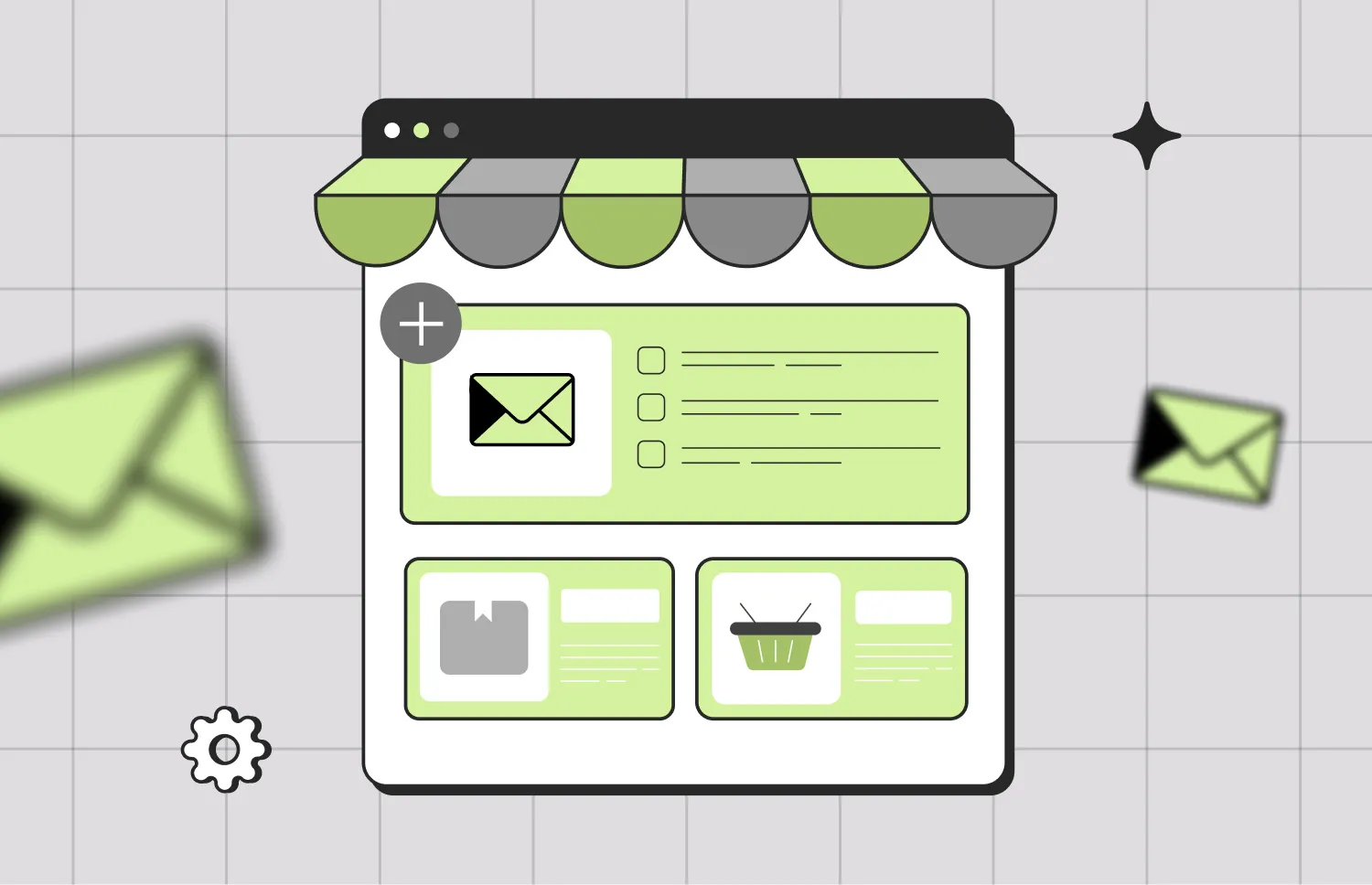
In a typical online store with 10,000 monthly visitors, only a portion of users proceed to checkout. Of those, 60–70% abandon their carts without completing the purchase.
This is no longer a traffic or advertising issue. The customer has already selected a product, reached the final step, and stopped. A portion of these orders is lost due to the lack of a timely response.
If the customer does not receive a reminder or a simple way to return to the purchase at that moment, they usually do not come back at all.
SMS addresses this exact gap between intent and action. The message is delivered within minutes after leaving the website and brings some users back to complete the purchase while the decision is still relevant.
The key difference with SMS is that the customer sees the message immediately after it is sent. It appears on the screen without folders or filters, so it does not get lost among other messages.
SMS open rates exceed 90%. In comparison, email in most online stores achieves 15–25% open rates even with a high-quality database.
With a base of 10,000 customers, this means over 9,000 people actually see the SMS, while email reaches only 1,500–2,500 users. The difference is significant.
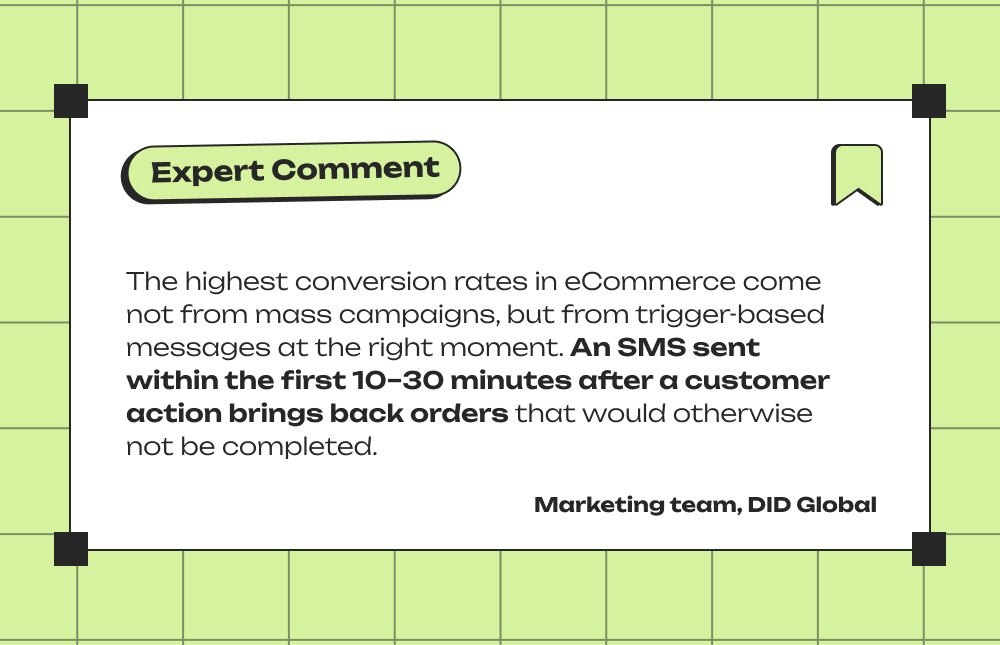
This has a direct impact on short-term scenarios. If the message is delivered within the first 10–30 minutes after the customer’s action, the likelihood of returning is much higher than after several hours or the next day.

SMS delivers results at points where the customer has already taken action but has not completed it or has not returned independently.
The strongest impact comes from abandoned cart recovery. This is the moment when interest is already formed, but the action is not completed.
Timing is critical. An SMS sent within 10–30 minutes after leaving the site generates the highest response. CTR in such messages reaches 8–12%. If sent after 24 hours, the result drops 2–3 times.
With 1,000 abandoned carts, this means 100–150 users return to the site. Some complete the purchase, and even with an average order value of $50, this results in several thousand dollars in additional revenue without acquiring new traffic.
SMS with order confirmation and delivery status affects not only service but also future sales.
Clear information reduces support requests and increases trust in the store. The customer does not need to search for information and is less likely to delay receiving the order.
Delivery is a key moment. It is when the customer interacts with the brand again. A message with a complementary product offer or a personalized discount at this stage can generate 5–10% additional orders.
SMS also works as a reactivation channel for customers who have not made purchases for a long time.
The effect appears only with personalization. Messages that consider previous purchases or interests generate significantly higher engagement than mass campaigns.
CTR in such campaigns can exceed 10%, allowing businesses to bring customers back without additional advertising costs.
SMS works at the final stage, when the customer is ready to act but has not completed the action.
The difference between mass and segmented campaigns is clearly visible in numbers. Mass SMS typically delivers CTR at 3–6%. With segmentation and personalization, this increases to 8–12% or higher depending on the scenario.
With a database of 5,000 contacts, this means 400–600 visits to the site from a single campaign. Even with a conversion rate of 5–8%, this results in 20–50 additional orders.
With an average order value of $50, this means $1,000–2,500 in additional revenue from a single campaign without changes to the advertising budget.
The key point is that these orders come not from new traffic, but from customers who were already close to purchasing but did not complete it on their own.
In one DID Global project, an online store operating in Europe had a customer base of over 20,000 users. Daily volume was around 300–400 orders, but a significant portion of users did not complete purchases or return after the first interaction.
Initially, SMS was used only for order confirmation. This covered the service aspect but did not impact sales. The main losses occurred at the abandoned cart stage and after delivery, when the customer had already interacted with the brand but did not take further action.
After integrating SMS with CRM and launching trigger-based scenarios, the workflow changed. Messages were sent 15 minutes after cart abandonment, bringing customers back while the decision was still relevant. On the delivery day, customers received SMS with order details and a personalized offer for the next purchase based on their history.
This delivered measurable results. Abandoned cart recovery added 12–15% to total orders. CTR in trigger SMS consistently exceeded 9%, significantly higher than standard marketing channels. Repeat purchases increased due to targeted offers delivered at the right moment.
Traffic volume, advertising spend, and team size remained unchanged. Additional revenue came from customers who previously dropped out of the funnel but began returning and completing purchases.
SMS provides accurate data when integrated into CRM.
Key metrics include:
It is important to consider that delivery depends on infrastructure. Route quality and sender reputation determine whether the message reaches the customer.
If SMS is used only for order confirmation, most of its potential remains unused.
DID Global helps identify where customers are lost in the funnel and build SMS as part of the sales process.
SMS is connected via API or ready integrations with CRM and CMS.
After that, trigger scenarios are launched:
Without integration, SMS remains a separate channel and does not deliver consistent results.
If some orders are not being completed or customers are not returning, this is exactly where SMS delivers quick results.
Submit a request, and we will show how many orders you are currently losing and how to recover them through SMS without increasing your budget.