Thank you!
The form has been successfully submitted
The form has been successfully submitted
Oops! Something went wrong, please try again
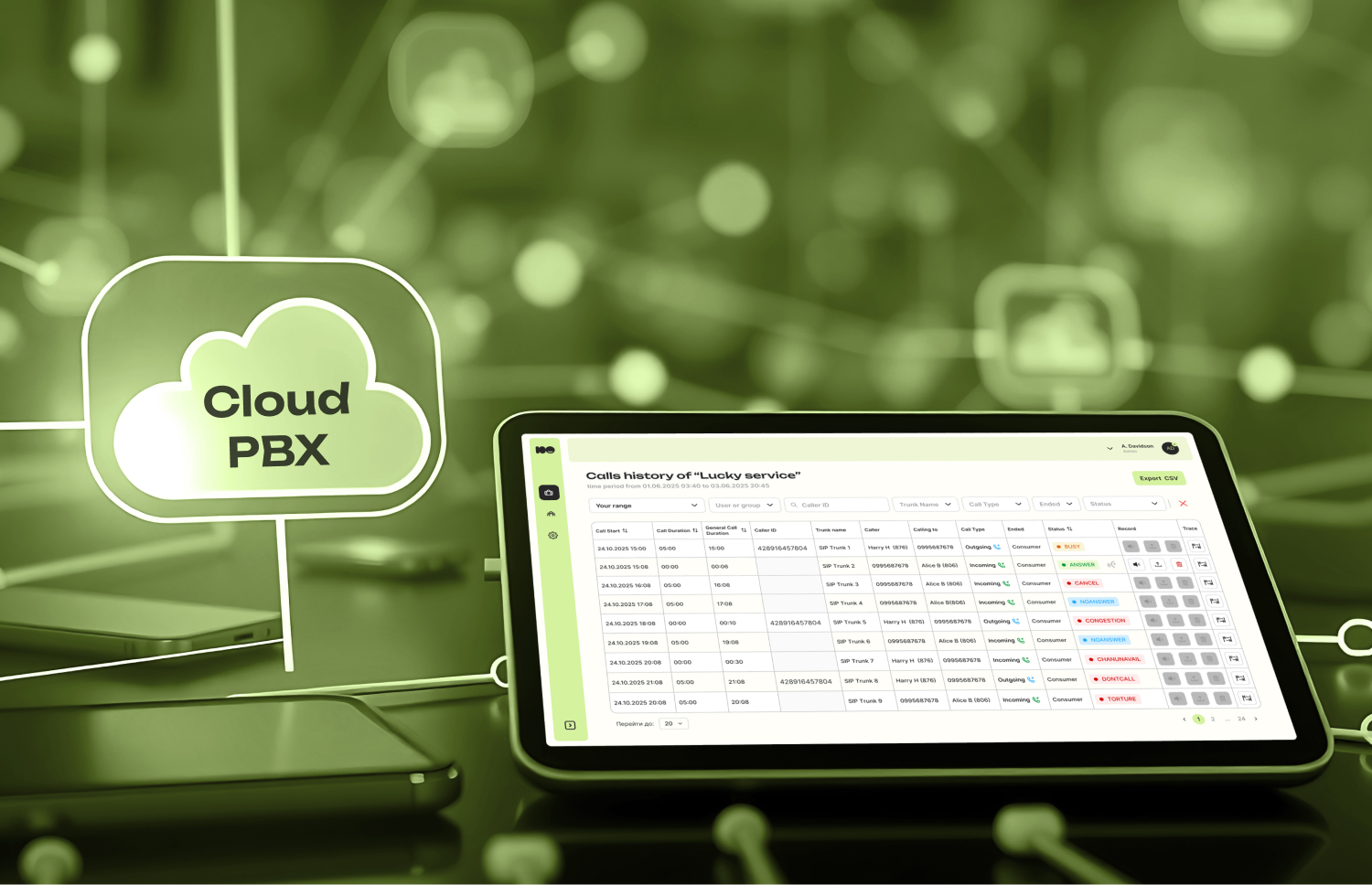
Companies working in sales, service, and support have long moved from separate tools to fully unified communication systems. A customer expects a fast and relevant response whether they reach out by phone or via a form on the website. This is why integrating Cloud PBX with CRM has become a key element of operational efficiency.
When communication and data are stored in different systems, a business loses time, context, and opportunities. But when telephony and CRM work as a single mechanism, every call becomes an action, analytics, and a managed process.
Before reviewing the benefits of integration, it is important to understand what happens inside companies where telephony and CRM operate separately. On the surface everything may look stable, but within team workflows “gaps” appear that reduce conversion and slow down inquiry processing.
Key problems include:
These factors accumulate and create systemic efficiency loss that can only be eliminated through full process integration.
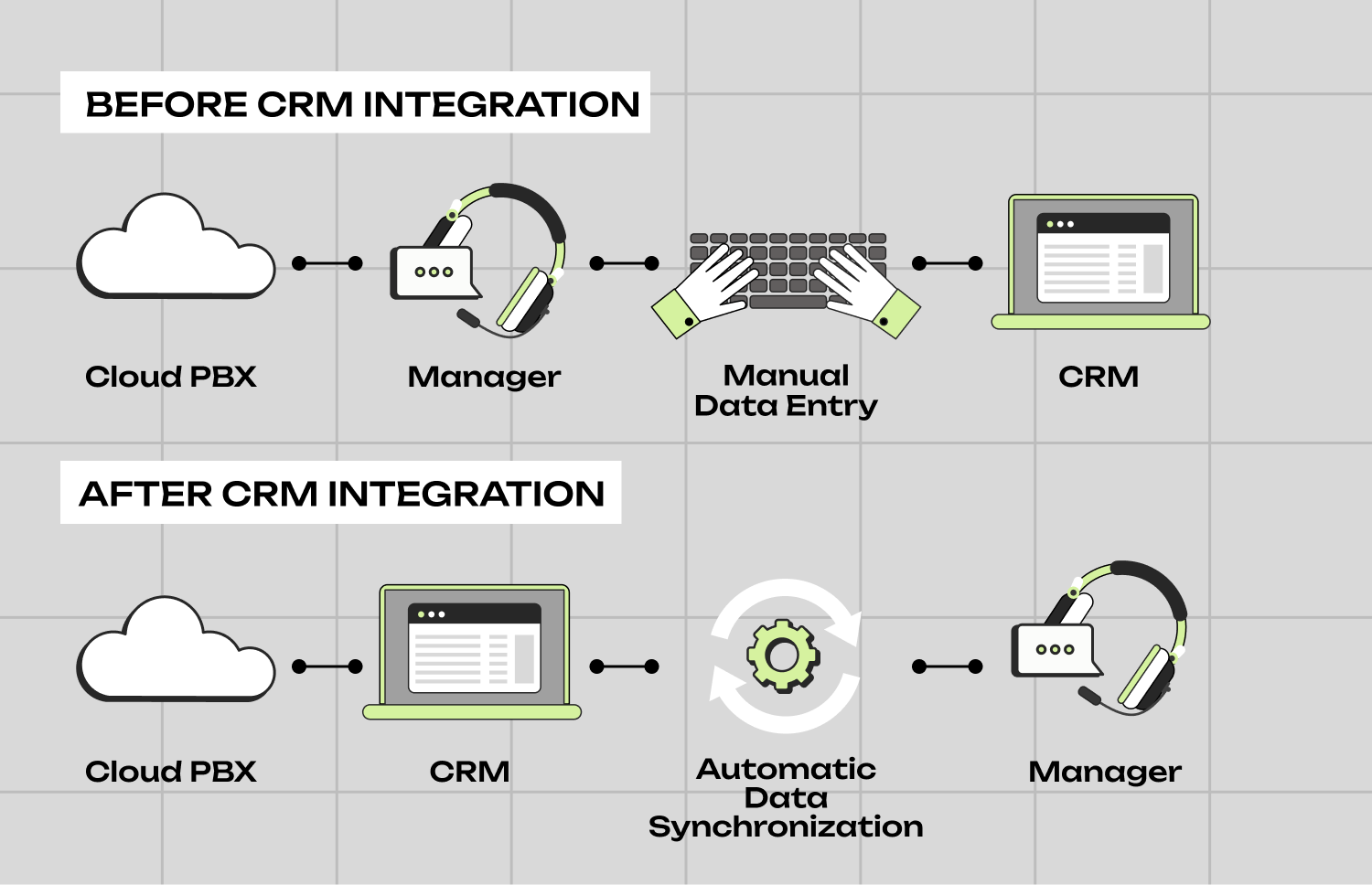
After connecting PBX to CRM, all calls are synchronized automatically. This gives the manager full context and creates a digital footprint of every interaction.
Key capabilities:
This significantly reduces inquiry handling time.
Switching to a unified system gives a business several tangible benefits.
Full customer context is available immediately. The manager works faster and without repeated clarifications.
Integration enables automation: tasks, follow-up actions, deal stage updates, NPS surveys. Routine activities are handled by the system instead of the team.
The manager sees information instantly during the call, while IVR helps route the request correctly. This reduces queues and response time.
A company receives accurate data on:
This simplifies team management and forecasting.

Before integration, it is important to assess system compatibility. Most often, businesses use:
DID Global’s cloud infrastructure supports these CRMs through API and ready-made connectors.
Integration enables the launch of automated scenarios that reduce team workload:
This makes processes predictable and repeatable.
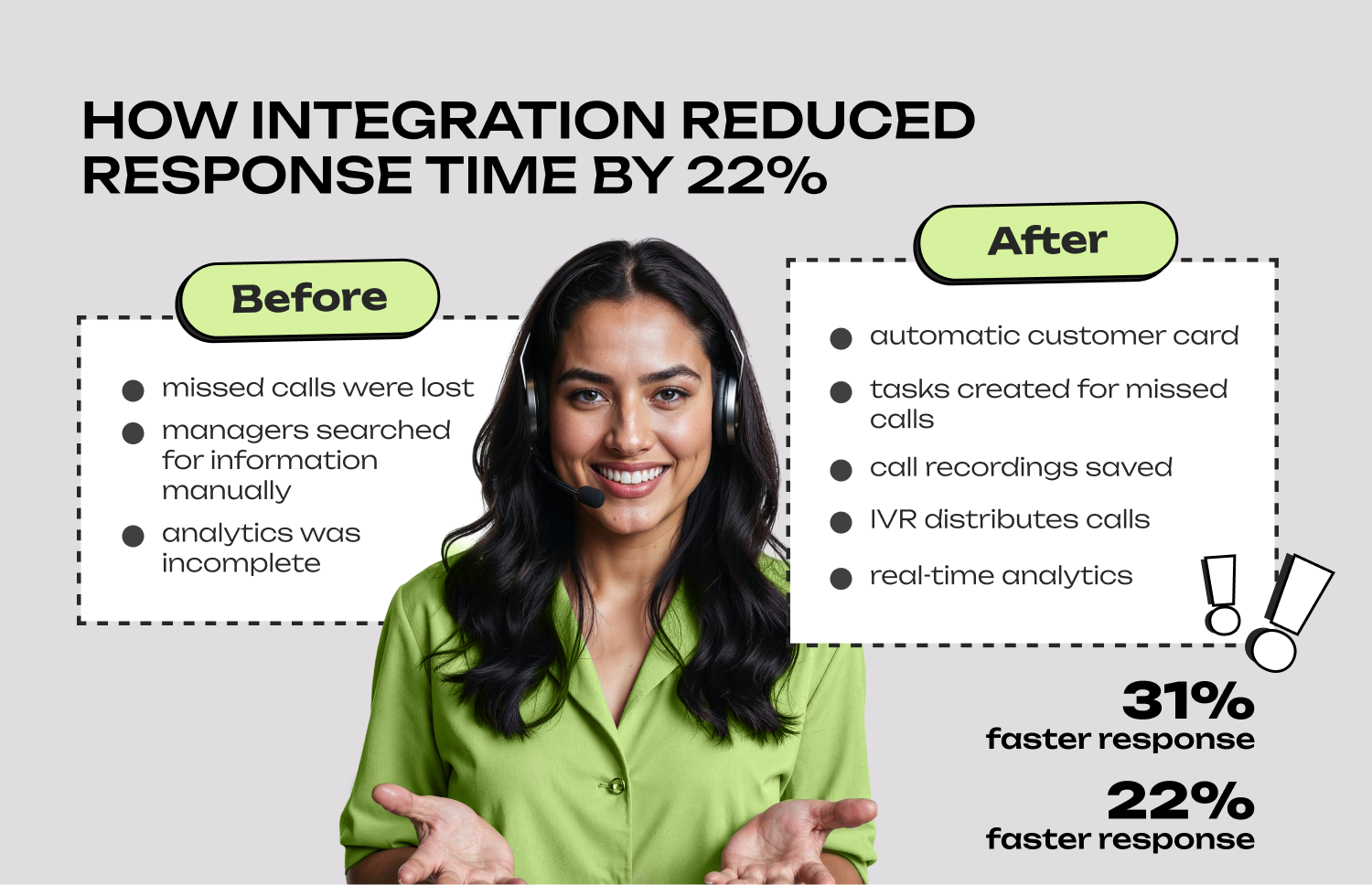
A European marketplace operating with high call volume faced delays in inquiry processing: managers manually searched for information, missed calls got lost, and analytics were incomplete.
After integrating DID Global Cloud PBX with the CRM:
Result after 2 months:
Integrating Cloud PBX and CRM creates a unified system in which every call automatically becomes data, a task, or an action. This increases inquiry handling speed, improves service quality, and enables scalability.
DID Global’s infrastructure helps companies launch such integrations quickly and without complex configurations, ensuring stable voice routing in 150+ countries.