SPAM Checker for Voice Traffic: Why Calls Fail to Reach Customers in 2026 and How Businesses Can Control It
news
30.12.2025
Modern mobile operators use strict anti-spam filters to protect subscribers from fraudulent calls. The side effect is that a portion of legitimate business calls is blocked or marked as spam without any warning or explanation.
For contact centers and outbound teams, this creates the illusion that “customers aren’t picking up,” while the real reason is different: the call never passed the operator’s filtering system.
Market estimates for 2025–2026 show:
up to 40% of outbound calls in some segments are marked or blocked by operators
companies lose between 10% and 30% of potential contacts
blocking is often invisible to businesses – the system simply shows “no answer”
To control this process, companies use a Voice SPAM Checker – a tool that analyzes number reputation, traffic patterns, routing geography, and compliance with operator behavioral models.
Below is an in-depth explanation of why calls get blocked, how anti-spam algorithms work, and how the SPAM Checker helps ensure stable call delivery.
1. Number reputation: the primary factor that decides a call’s fate
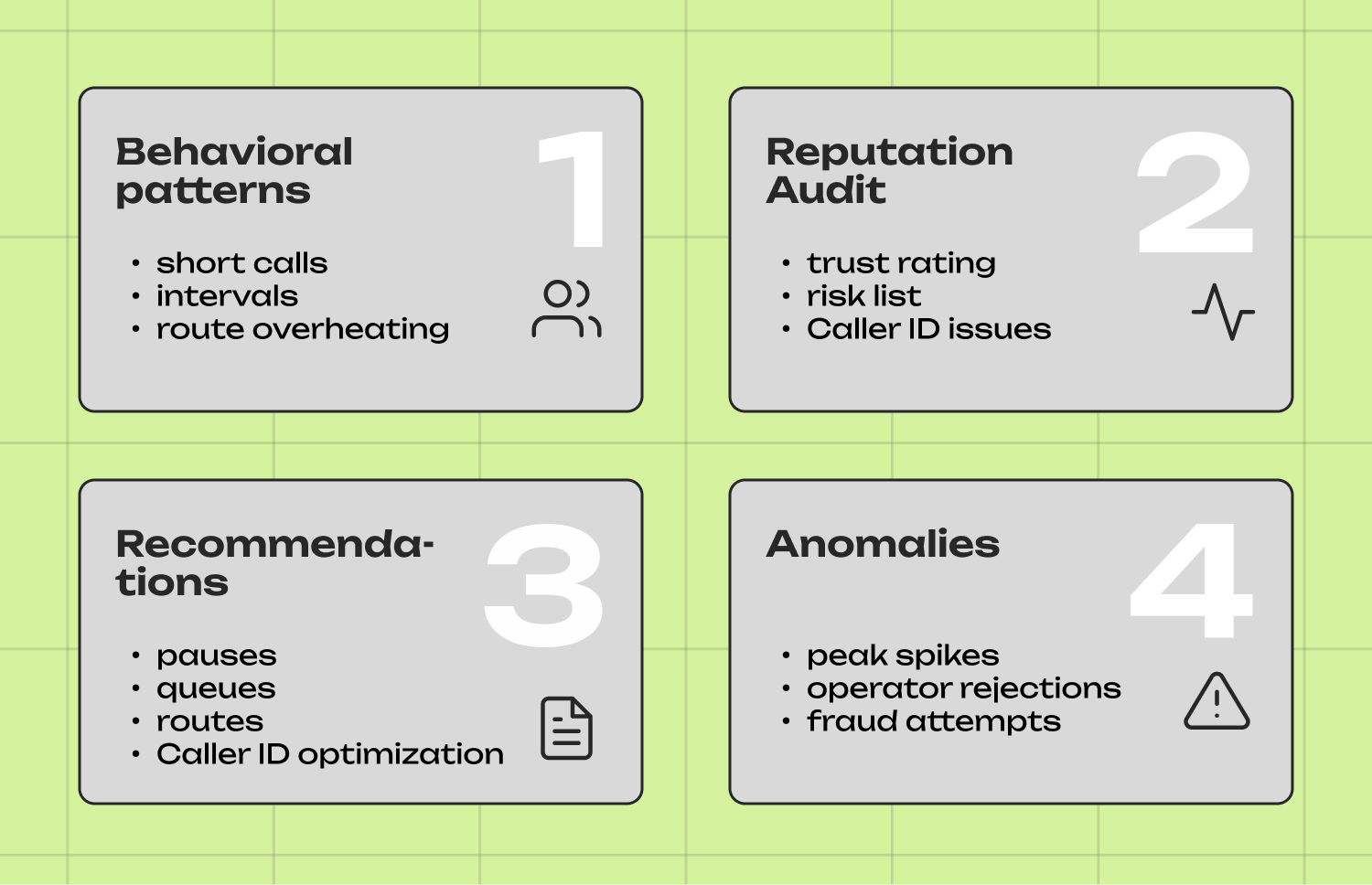
Mobile operators maintain behavioral reputation profiles for every number. If a number’s traffic looks “unnatural,” the system lowers trust and eventually blocks it.
Risk indicators include:
short calls (1–3 seconds) repeated hundreds of times
sudden spikes in activity
unusually high “no-answer” rates
identical intervals between calls (a sign of automated systems)
excessive attempts to the same subscriber
The SPAM Checker analyzes a number’s profile, identifies specific behavioral anomalies, and shows which pattern triggers operator filters.
DID Global clients typically reduce spam-flagging rates by 20–45% after stabilizing their traffic patterns.
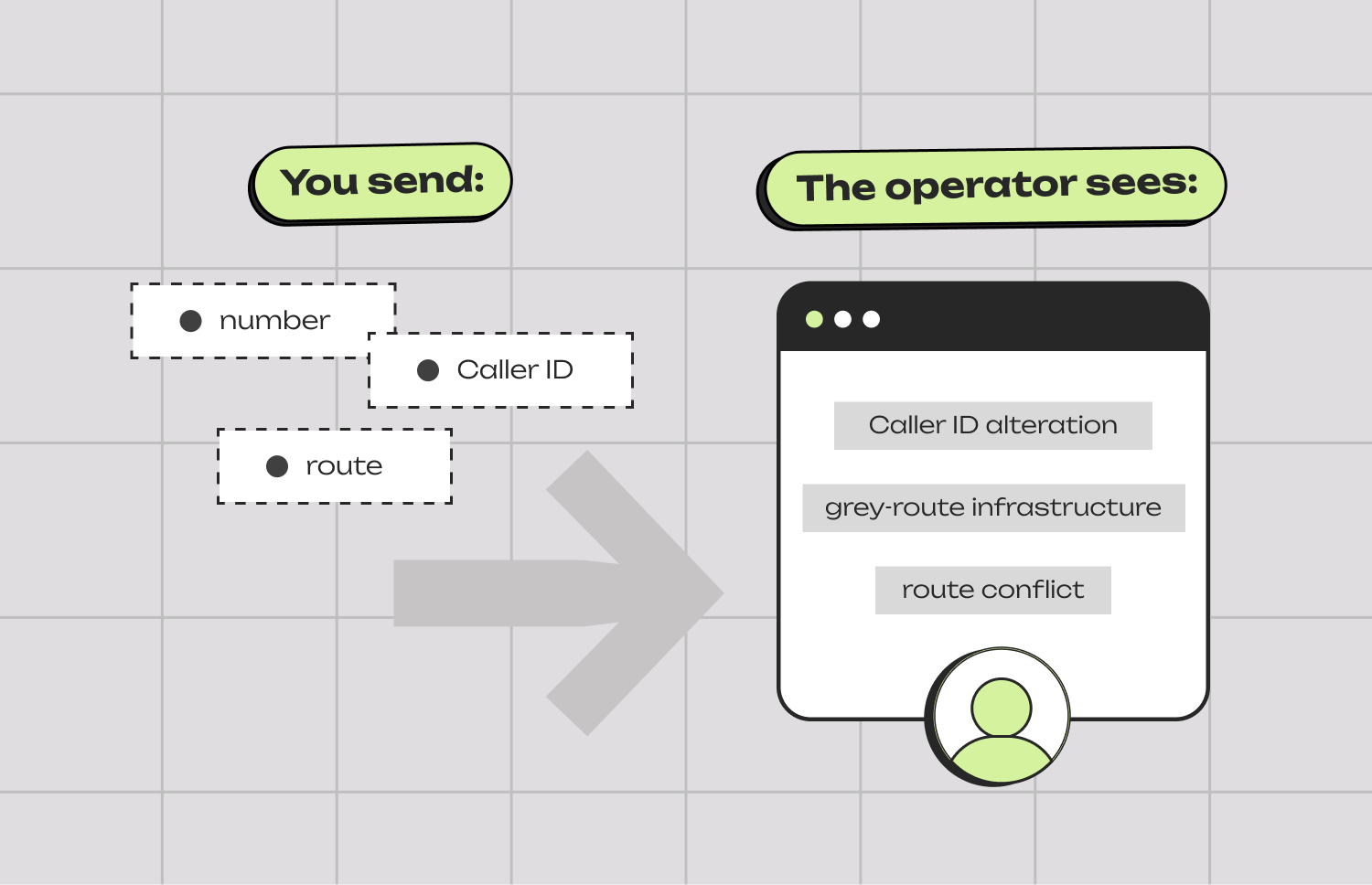
2. Caller ID and routing: whether what you send matches what the operator sees
Even legitimate calls may be blocked if:
Caller ID is altered during transit
one number is used across several campaigns
routes pass through grey-route infrastructure
the operator detects a mismatch between Caller ID and traffic source
Operators enforce a “consistent identity” rule – the route must match the Caller ID.
The SPAM Checker verifies:
how the number appears to the terminating operator
By clicking “Accept”, you agree to the storing of cookies on your device to enhance site navigation, analyze site usage, and assist in our marketing efforts. View our Privacy Policy for more information.