

Thank you!
The form has been successfully submitted
The form has been successfully submitted
Oops! Something went wrong, please try again
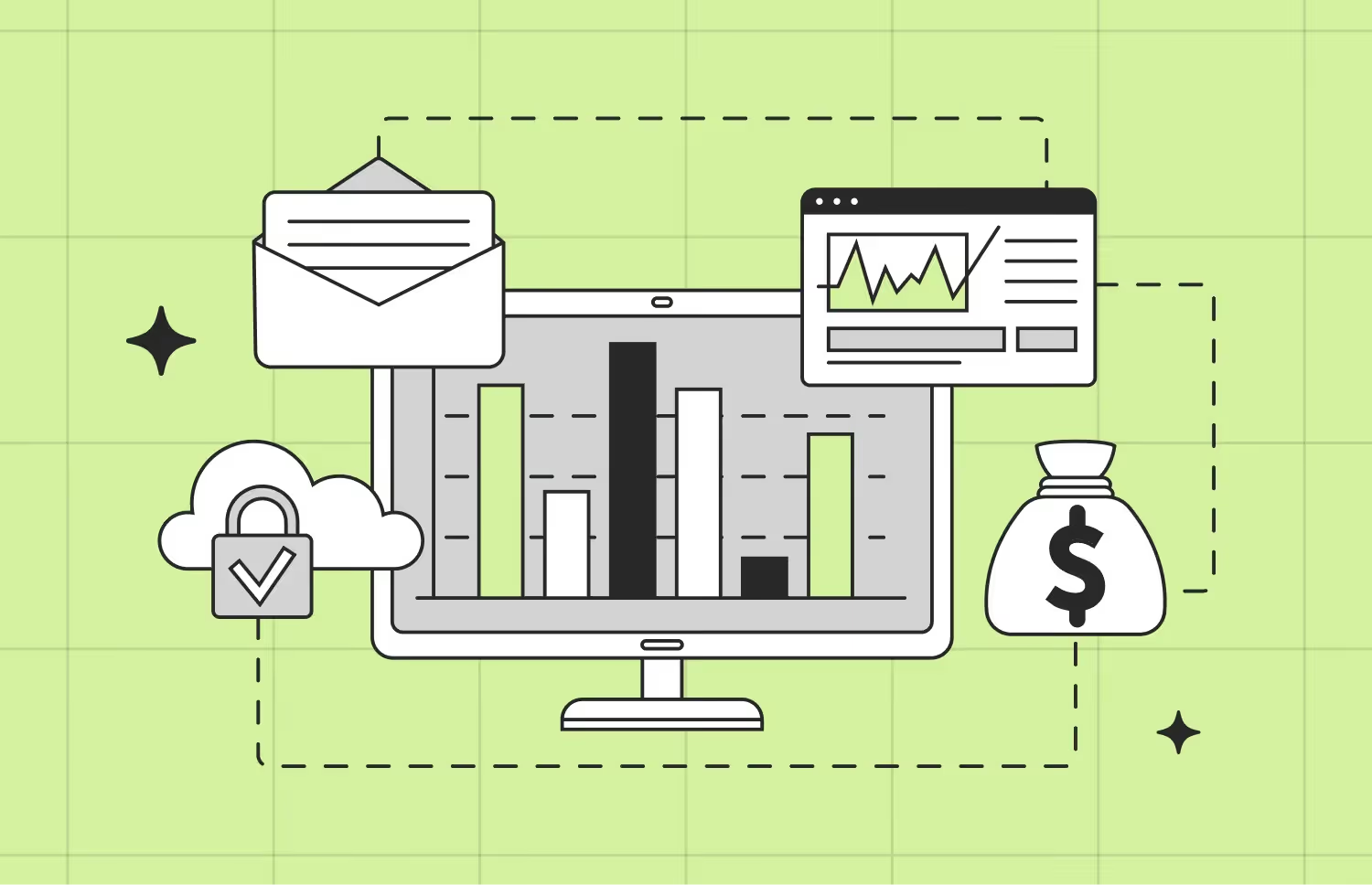
In most companies, telephony works like a “black box.” Calls exist, but what happens inside is not visible. Some results are recorded in CRM, some remain within conversations, and some are lost entirely.
With a load of 100–300 calls per day, this leads to systematic losses:
In reports, this appears as a drop in conversion or “weak leads,” although the problem often lies in communication itself.
Call analytics closes this gap. It turns conversations into data:
This makes it possible to work not with assumptions, but with concrete numbers and identify loss points in the funnel.

In phone sales, the result is determined not by the number of calls, but by what happens inside the conversation. Without analytics, this stage remains uncontrolled.
With the same traffic volume, differences in call handling can lead to a 1.5–2x gap in conversion. Without data, this looks like “unstable results,” while the cause lies in specific actions of managers.
Companies that use call analytics see not just the overall picture, but details at the level of each call.
Without analytics:
With analytics:
For example:
Almost a twofold difference with the same leads.
The same applies to scripts and traffic sources:
As a result, decisions are made based on specific metrics, not assumptions. This allows faster identification of growth points and elimination of funnel losses.
Modern VoIP telephony provides more than just the fact of a call. It collects detailed statistics for each contact.
Duration reflects the quality of interaction.
For example:
Analysis helps understand:
Call conversion is one of the key metrics.
It shows:
For example:
This signals the need to adjust scripts or train the team.
Call tracking allows linking each call to its source.
As a result, it becomes clear:
This enables optimization of marketing budgets without guesswork.
At this stage, it becomes clear that data alone does not deliver results without proper infrastructure for collection and processing.
If there is already traffic but no clear understanding of where leads are lost, it is worth starting with a basic telephony audit: checking routing, call reachability, and data accuracy.
DID Global helps set up call analytics so that every contact is recorded and used in operations, rather than lost between systems.
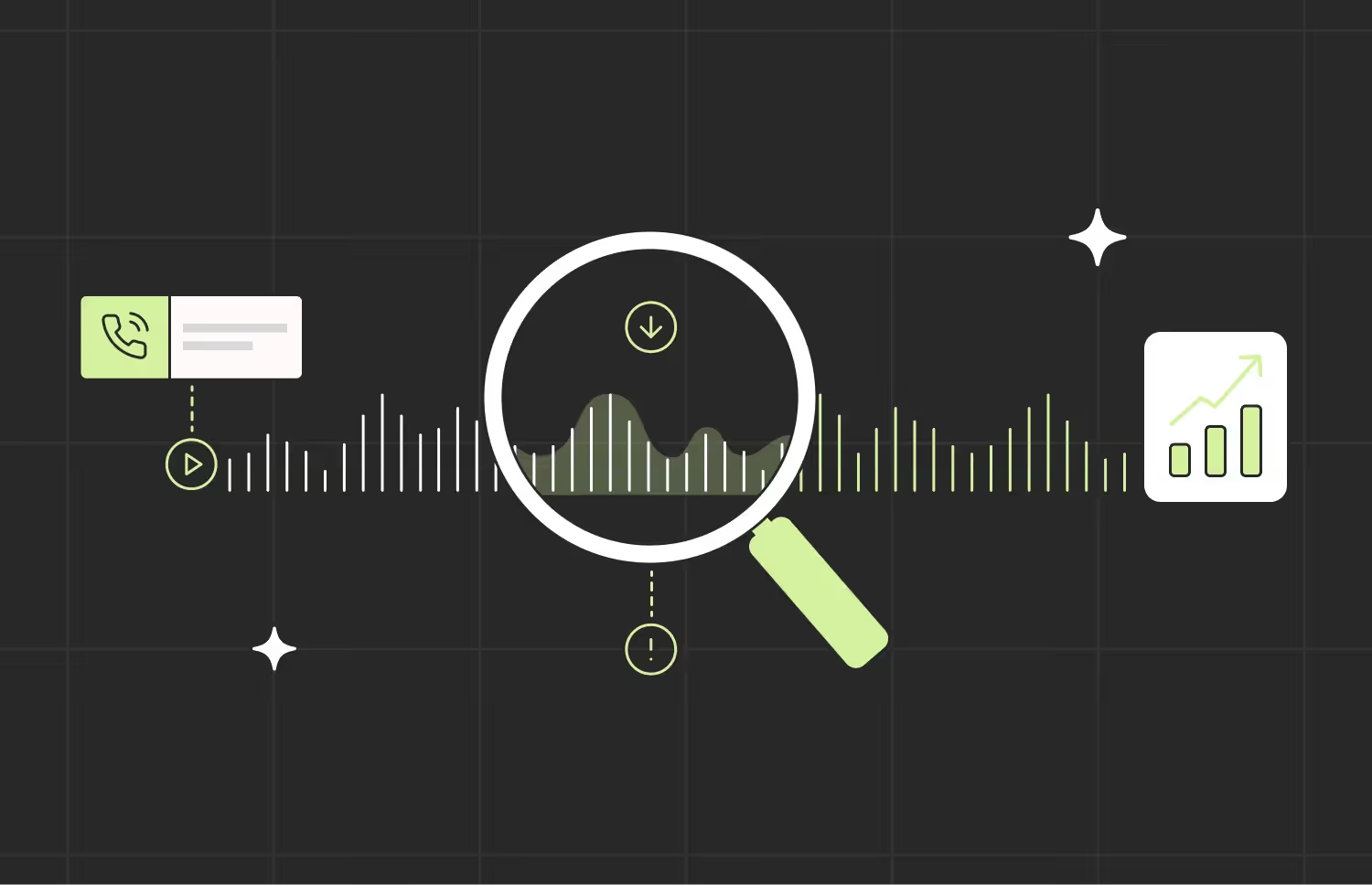
Data starts working only when it changes team behavior. Simply having recordings or reports does not create value if they are not used in processes.
Call analysis helps identify not general “call quality,” but specific moments where customers drop off.
This most often happens at the beginning of the call, when stating the price, or when handling objections. For example, if in the first 10 seconds the customer does not understand who is calling and why, some calls end almost immediately.
In practice, this is tested simply: calls with low conversion are compared with those that ended in a deal. The difference is usually not in the product, but in wording and conversation structure.
After adjusting the introduction, arguments, and objection handling, the dynamics of the dialogue change. Conversations last longer, customers reach the core of the discussion, and conversion increases. Even basic improvements can add 5–15% without increasing traffic.
Analytics removes subjectivity from team evaluation. Instead of general assumptions, clear metrics appear.
With the same workload, conversion differences between managers often reach 1.5–2x. This is visible in numbers: one operator consistently moves customers forward, while another loses them at the same stage.
This allows targeted improvements. Instead of changing the entire team or script, specific calls can be analyzed, strong examples highlighted, and approaches aligned.
As a result, the gap between operators decreases, and overall team efficiency grows without increasing headcount or budget.

Call analytics impacts not only sales but also service quality.
Through data, businesses can see:
This allows:
Customers receive faster and more structured communication.
Maximum efficiency is achieved when call analytics is combined with CRM and BI systems.
In this case:
For example:
lead source → call → sale → repeat contact
This allows evaluation of not just individual calls, but the entire customer journey.
To control telephony efficiency, a basic set of metrics is sufficient:
These metrics provide a clear understanding of where the business is losing money and where it can grow.
Call analytics only makes sense when it is integrated into processes: CRM, routing, and team operations.
At DID Global, analytics is built around routing and call handling. Data is not isolated but connected to how each contact is processed — from the first call to the result.
This allows not only analyzing the situation after the fact, but also changing the process: adjusting call distribution, removing delays, and addressing specific loss points.
If there are already calls but no clear understanding of what happens to them, this is the place to start. In most cases, the growth point lies not in traffic volume, but in how it is handled.